Lid & gland care
OptiLight IPL
Controlled pulses of light applied around the eyes with appropriate eye protection; gland expression may be included.
Book a dry eye evaluation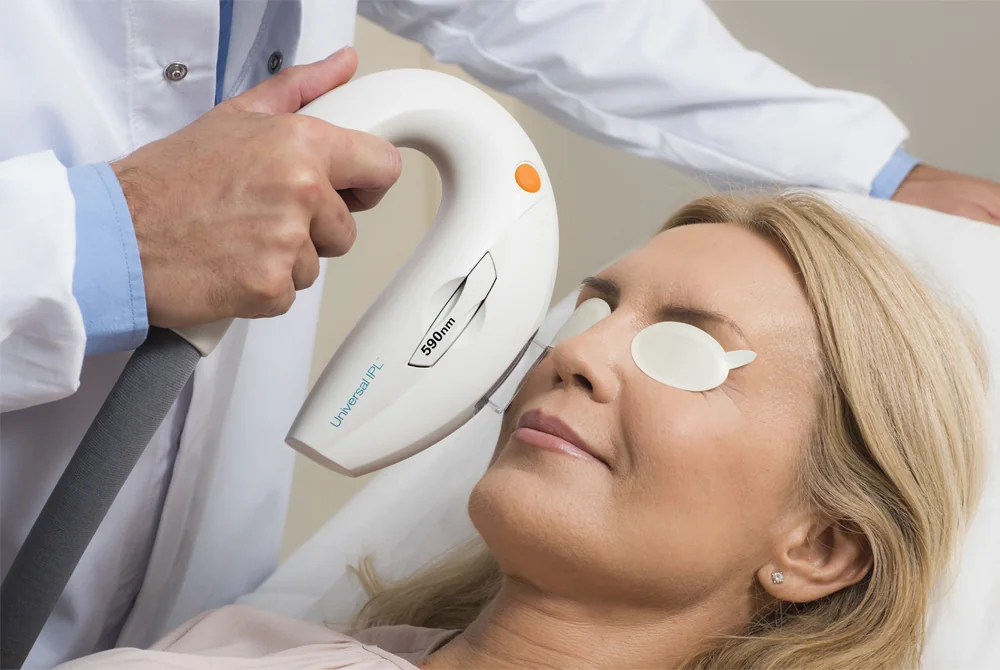
Who it may suit
Selected patients whose dry eye findings include meibomian gland dysfunction.
What we determine
Whether your eye findings, skin characteristics, medications and medical history support IPL as an option.
OptiLight uses carefully controlled pulses of broad-spectrum light applied to the skin below and around the eyes while the eyes are fully protected. It is designed to address signs of dry eye disease associated with meibomian gland dysfunction (MGD), a common cause of tears that evaporate too quickly.
What it addresses
At Village Eyes, OptiLight is not treated as a stand-alone answer. We first examine the eyelids, tear film, meibomian glands, ocular surface, skin type, medications and medical history. When the findings support IPL, it may be combined with gland expression, lubricants, warm compresses or other treatment selected for the patient.
What to expect
Your doctor reviews your medical history, medications, skin characteristics and recent procedures before recommending treatment. Appropriate eye protection is used. We explain the planned treatment area, course of visits, preparation and aftercare. Gland expression may be included when appropriate.
Is IPL right for me?
Not everyone is a candidate. Photosensitizing medications, certain skin or medical conditions and recent procedures can affect suitability. Possible effects include temporary redness or discomfort; burns, pigment changes and eye injury are risks that require careful screening and protection. Results and the need for maintenance vary.
Start with a dry eye evaluation or explore eyelid care.
IPL research and resources
Clinical trials support IPL for selected patients with meibomian gland dysfunction and ocular rosacea. Evidence for Demodex-associated disease is emerging. Devices, treatment protocols and additional therapies differ between studies.
MGD: randomized, double-masked, sham-controlled trial (2020). In 114 participants, IPL improved tear breakup time, gland secretion quality and expressibility, and dry eye symptoms compared with sham treatment at six months.
Ocular rosacea: randomized controlled study (2026). In 48 participants, adding IPL to gland expression and erythromycin ointment improved tear stability, gland secretion and lower eyelid vascularity. Symptom questionnaire scores and Demodex measures did not differ significantly between groups.
Demodex-associated MGD: IPL versus lid hygiene (2026). In 50 participants, IPL produced faster symptom relief and greater improvements in gland function over six weeks. Both groups had fewer mites, with no significant difference in mite counts at six weeks. This supports a possible adjunctive role; it does not establish IPL as a replacement for targeted Demodex treatment.
Medically reviewed by Lorin Vogel, OD · October 27, 2026 · Meet the doctors
Sources & further reading
Westwood Village
Start with a closer look.
Meet with a dry eye doctor in Westwood to understand your symptoms and your options.