Lids & glands
Ocular rosacea
Rosacea can affect the eyelids and eyes as well as the skin. We evaluate the tear film, eyelid glands and ocular surface to guide care around your particular findings.
Book a dry eye evaluation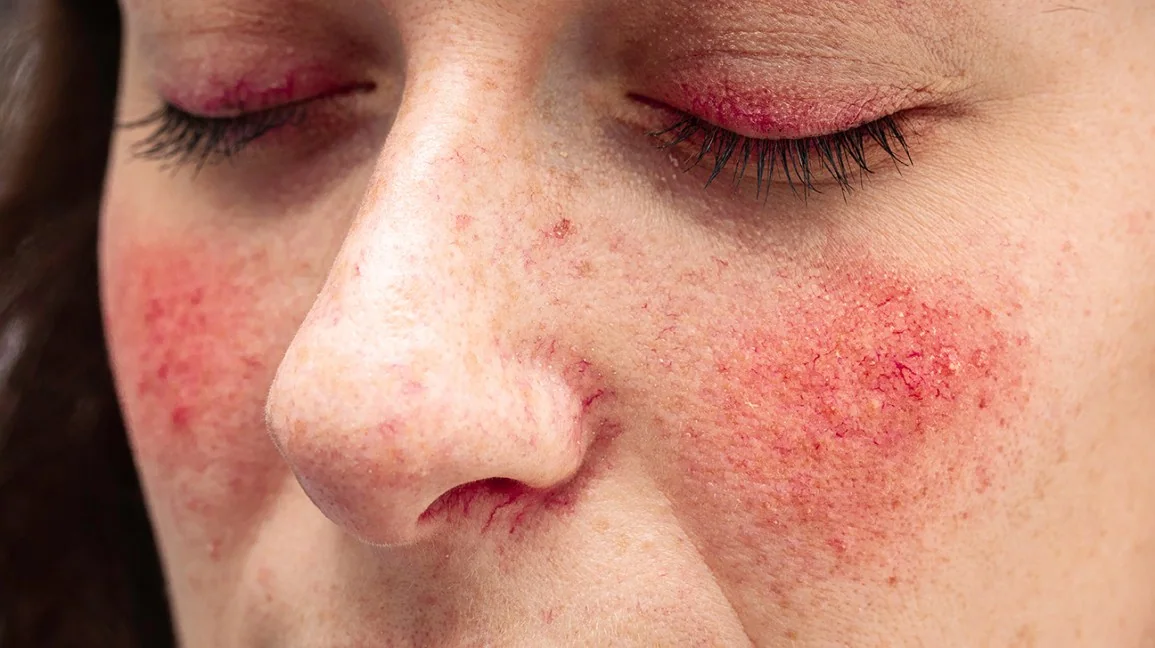
What you may notice
Ocular rosacea may cause burning, grittiness, dryness, redness or light sensitivity. Eyelid irritation and recurring styes or chalazia can also occur. Eye symptoms can develop even when facial skin changes are subtle.
The connection with eyelid glands
Inflammation around the eyelid margin can overlap with posterior blepharitis and meibomian gland dysfunction. When the tear film's oil layer is affected, tears may evaporate more readily and vision may fluctuate.
Rosacea and Demodex-related blepharitis can coexist. They are not interchangeable diagnoses: your doctor examines the lash bases and eyelids to identify which contributors need attention.
Care selected for your findings
We begin with OCULUS Keratograph 5M imaging and measurements, then review your symptoms and examine your eyes. We discuss a plan that may include appropriate eyelid care, lubrication and prescription treatment. Selected patients with associated meibomian gland dysfunction may be evaluated for in-office options such as OptiLight IPL.
The aim is to manage the eye findings and support a more stable tear film. Treatment suitability and follow-up are individualized; an evaluation does not commit you to a procedure.
When symptoms need a closer look
New or worsening eye pain, reduced vision or significant light sensitivity calls for prompt assessment. Persistent redness should be examined rather than assumed to be rosacea.
Medically reviewed by Lorin Vogel, OD · October 27, 2026 · Meet the doctors
Sources & further reading
Westwood Village
Start with a closer look.
Meet with a dry eye doctor in Westwood to understand your symptoms and your options.